
Data centers provide a vital service for modern companies, housing the infrastructure needed for data processing, storage, and analytics on a massive scale. Experts expect data center demand to grow by 20% every year, reaching more than 200 gigawatts by 2030. Keeping up with this staggering growth requires careful preparation, which is where data center capacity planning comes in.
WHAT IS DATA CENTER CAPACITY PLANNING?
Capacity planning means ensuring that a data center’s infrastructure is capable of meeting current demand, projected usage, and organizational goals. A key objective is to maximize resource efficiency, such as reducing overall energy usage while delivering the necessary cooling.
Data center capacity planning strategies focus on six main areas of IT infrastructure:
- Space planning: Is the facility large enough to accommodate the required server capacity, allow for expansion, and promote good airflow?
- Cooling capacity: Are cooling systems energy efficient and optimally placed to prevent overheating? Does your server distribution contribute to heat dissipation?
- Power: Does your facility have enough primary and backup energy capacity for regular operations and emergency scenarios? Are power sources designed to accommodate future expansion?
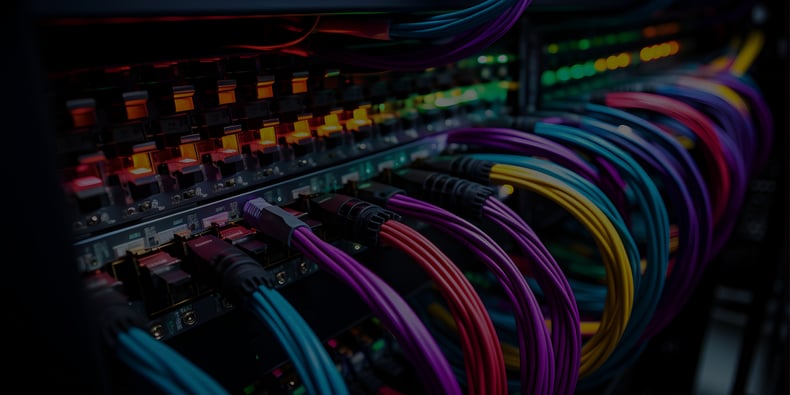
- Network connections: Does your network cabling support the high-speed data processing necessary for digital operations?
- Hardware and on-prem resources: Does your facility have sufficient servers, hard drives, GPUs, and other assets for storage and processing?
- Software and virtual computing resources: Do you need to increase or reduce your cloud compute? Do your third-party providers deliver consistent performance?
Your organization’s data center needs are unique, so capacity planning strategies must be customized to your operations to be effective. Different data center tiers also impact factors like power redundancy and platform backups.
WHY IS CAPACITY PLANNING IMPORTANT FOR DATA CENTER OPERATIONS?
With data center capacity planning, bigger isn’t necessarily better. Instead, the goal is to find the optimal balance of available resources and efficiency. Strategic decisions can provide many benefits for your organization:
- Cost-effective operations: AI data centers can significantly reduce operating costs with efficient resource allocation, such as efficient cooling and optical cabling.
- Consistent uptime: Redundant power, cooling, and network hardware can prevent devastating platform crashes. Sufficient server resources adapt to spikes in user activity.
- Improved hardware lifecycles: Improved cooling and airflow prevent damage from overheating and reduce the need to replace server components. Efficient use of virtual resources can also limit on-prem hardware requirements.
- Lower energy usage: Energy-efficient systems can provide enormous savings for data center operations. Green solutions also contribute to a positive public perception of your organization.
- Emergency preparedness: From DDoS attacks to cyberattacks on software vendors, data center operations don’t always go as planned. Capacity planning helps you avoid getting caught off guard.
Put simply, data center capacity strategies help you deliver the high level of service modern customers require.
WHAT ARE THE STEPS INVOLVED IN DATA CENTER CAPACITY PLANNING?
The process of capacity planning requires measuring your organization’s current resources and finding the best way to achieve the desired operating capacity, whether through on-prem, cloud, or hybrid solutions.
Establish Maximum Costs
Setting a ceiling for data center investments is a must. Otherwise, every organization would have 800G optical networks with cutting-edge tech. Being realistic about the cost to run a data center helps you make strategic decisions that provide sustainable, long-term performance.
Determine Uptime Requirements
How critical is it for your organization to avoid network downtime? Many SaaS providers, ISPs, Fintech companies, and healthcare providers need near 100% uptime, which makes redundant systems for power, processing, and data storage essential. Other enterprises can handle minor downtime during system maintenance without problems, simplifying infrastructure requirements.
Measure or Calculate Usage Metrics
You need accurate data on peak and off-peak server load, power demand (kW/h), and cooling needs (BTU/hr). Data center technicians keep an eye on these numbers every day.
Data center infrastructure management software can reveal insights for long-term usage. These tools help you make better projections for future demand based on current trends and growth objectives.
Identify Issues and Obstacles
Strategic planning can help you overcome issues with platform stability, overheating, or maintenance costs. An example is managing ports and cabling to avoid bottlenecks. Infrastructure management consultants are like doctors, diagnosing facility problems and designing effective solutions.
Assess Current Space Capacity
Capacity planning for data centers includes taking inventory of available assets, such as rack space, server rows, switches, and ports. You also need to measure floor space in relation to hot and cool airflow.
HOW DO YOU DEVELOP AN EFFECTIVE STRATEGY FOR DATA CENTER CAPACITY PLANNING?
With strategic data center capacity planning, you can minimize facility overhead and maximize performance at the same time. IT professionals can help you make smart, cost-effective investments. At TSP, we provide the expertise and talent needed to reach your objectives. Discover our full range of on-site and virtual data center services today.



IT Services
How Well Does Your IT Service Provider Know Your Business?
We hear this from our clients a lot: “You know our business better than we do!” As businesses grow...
Tech Insights
What is CMMI? A Model for Optimizing Development Processes
The Capability Maturity Model Integration (CMMI) is a process and behavioral model for software,...

Business Insights
The Pros and Cons of Remote Work and How to Tell If it’s Right for Your Company
These days nearly every activity has a digital application. From dating to shopping and everything...